· 4 min read
Seroma After Liposuction: Why It Happens and What to Do
How a seroma differs from ordinary swelling, when to contact your surgeon, and why compression garments do not replace treatment.
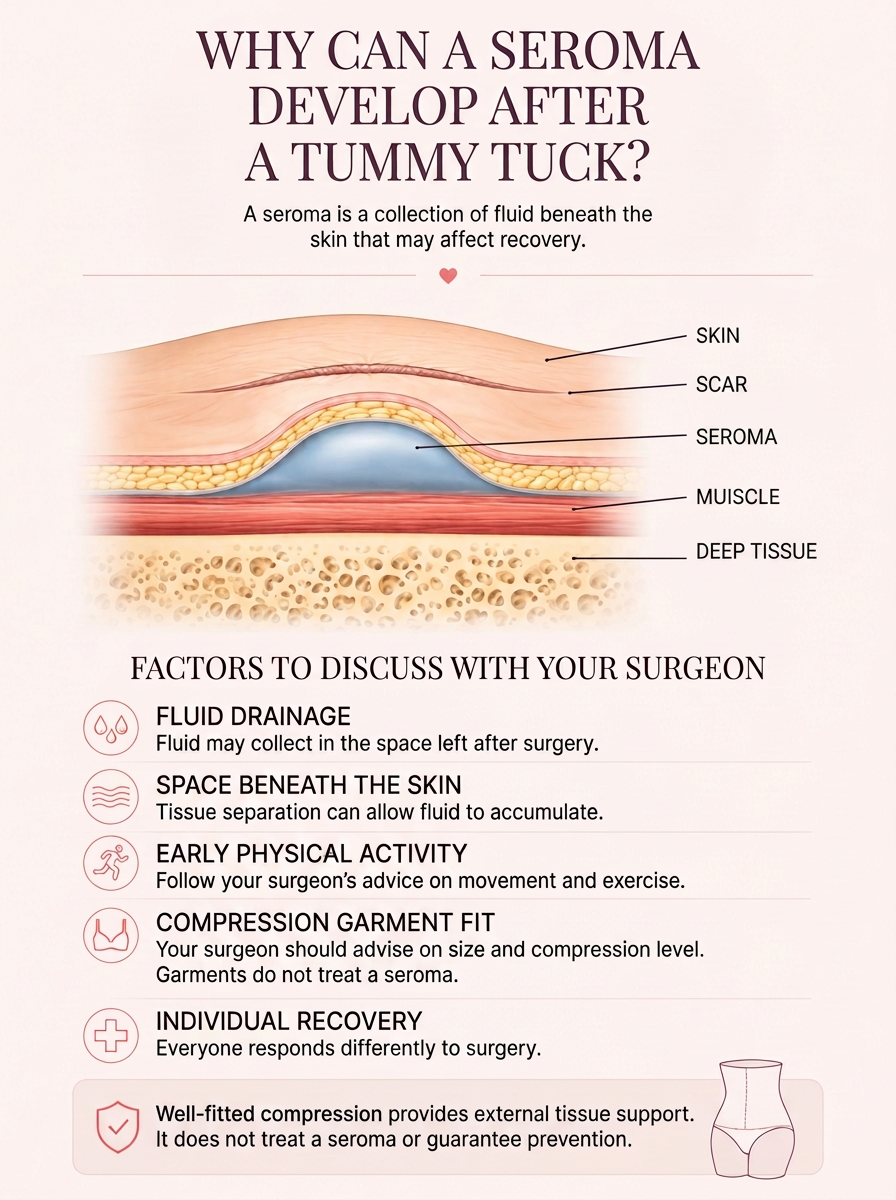
A seroma after liposuction is a collection of serous fluid beneath the skin in the operated area. It can also develop after a tummy tuck (abdominoplasty) and other plastic surgery procedures.
Some swelling after surgery can be part of recovery. A seroma differs because fluid collects in a specific area and may feel like a soft swelling or fluid moving beneath the skin. You cannot diagnose it yourself based on how it feels.
Why can a seroma develop after liposuction or a tummy tuck?
Liposuction and other operations disrupt tissue and small lymphatic vessels. A space can form between tissue layers where fluid may collect.
Factors that affect the risk of a seroma include:
- the extent and location of surgery;
- the degree of tissue disruption;
- the surgical technique used;
- individual recovery characteristics;
- following postoperative instructions.
Recovery deserves particular attention after abdominal liposuction and a tummy tuck, where seroma is a recognised postoperative complication. Garment selection is part of recovery guidance, but poorly fitted compression should not be described as an established main cause of seroma.
How can you recognise a possible seroma?
Contact your surgeon if you notice any of the following after surgery:
- a feeling of fluid collecting or moving beneath the skin;
- an enlarging swelling;
- pronounced asymmetry;
- increasing tenderness or pain.
If you develop redness, a raised temperature or a sudden increase in pain, seek medical advice as soon as possible. Never puncture or try to drain a seroma yourself.
What should you do about a seroma and how can you support recovery?
If a seroma has developed, your surgeon decides how to manage it. A small collection may sometimes be monitored, while other cases may need drainage by a medical professional. The decision depends on an examination and the condition of the tissues.
After surgery, follow your doctor’s instructions and prescribed activity plan, attend follow-up appointments, and wear compression garments if your surgeon recommends them. Do not independently change the compression level, size or wearing schedule.
What role do compression garments play?
Compression provides external support to the operated area. Well-fitted garments can be part of postoperative recovery, but they do not independently treat an existing seroma or guarantee its prevention.
Before wearing compression after surgery or childbirth, consult your treating doctor. Size, compression level and wearing schedule should be chosen individually; stronger pressure is not necessarily better.
Siluet Sabina compression garments after plastic surgery
Siluet Sabina is a Colombian garment with extra-firm compression for support of the abdomen, waist, back and thighs.
The model combines a latex layer, a cooling inner lining and an outer PowerNet fabric. Its firm construction supports the body and provides pronounced shaping while worn.
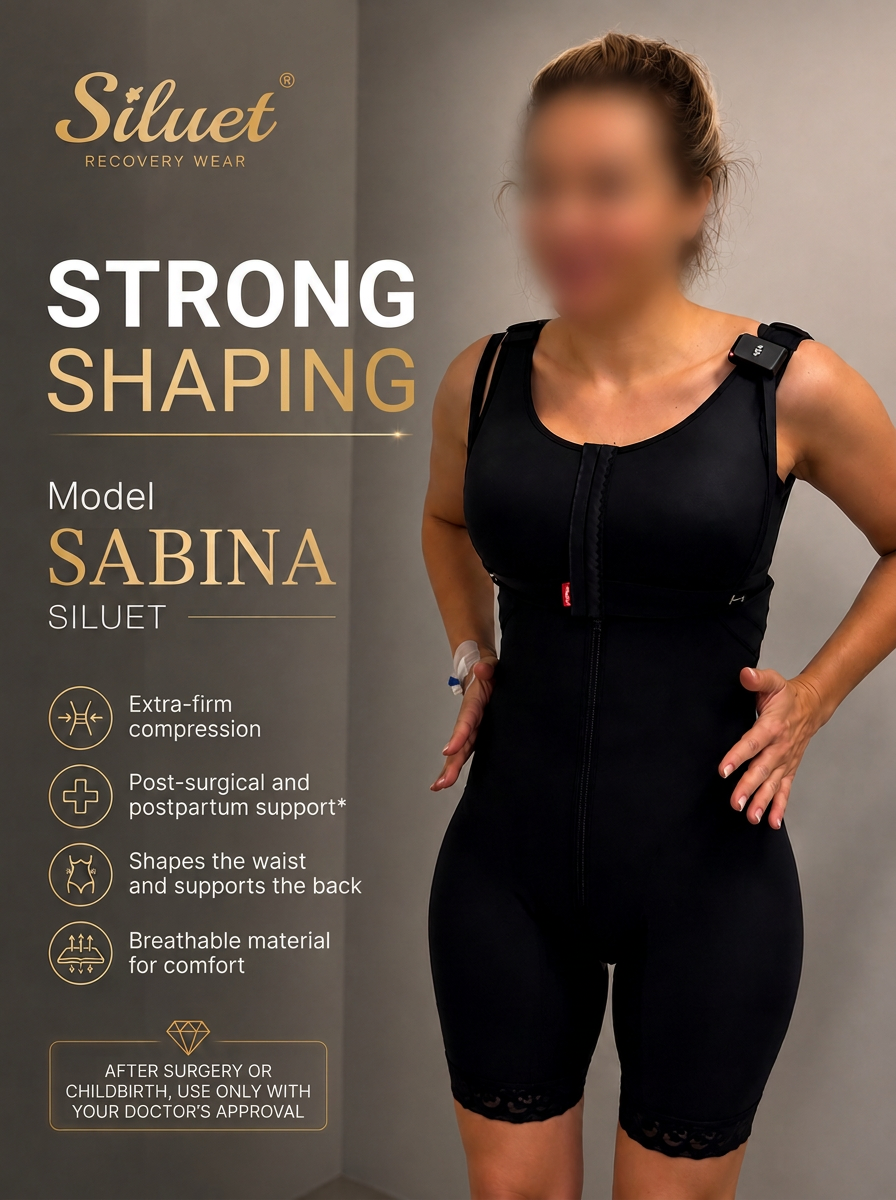
After liposuction or a tummy tuck, Sabina may be used if your surgeon recommends strong compression. Choose a size using your current measurements rather than sizing down to increase pressure. If unsure, ask a consultant and confirm the choice with your doctor.
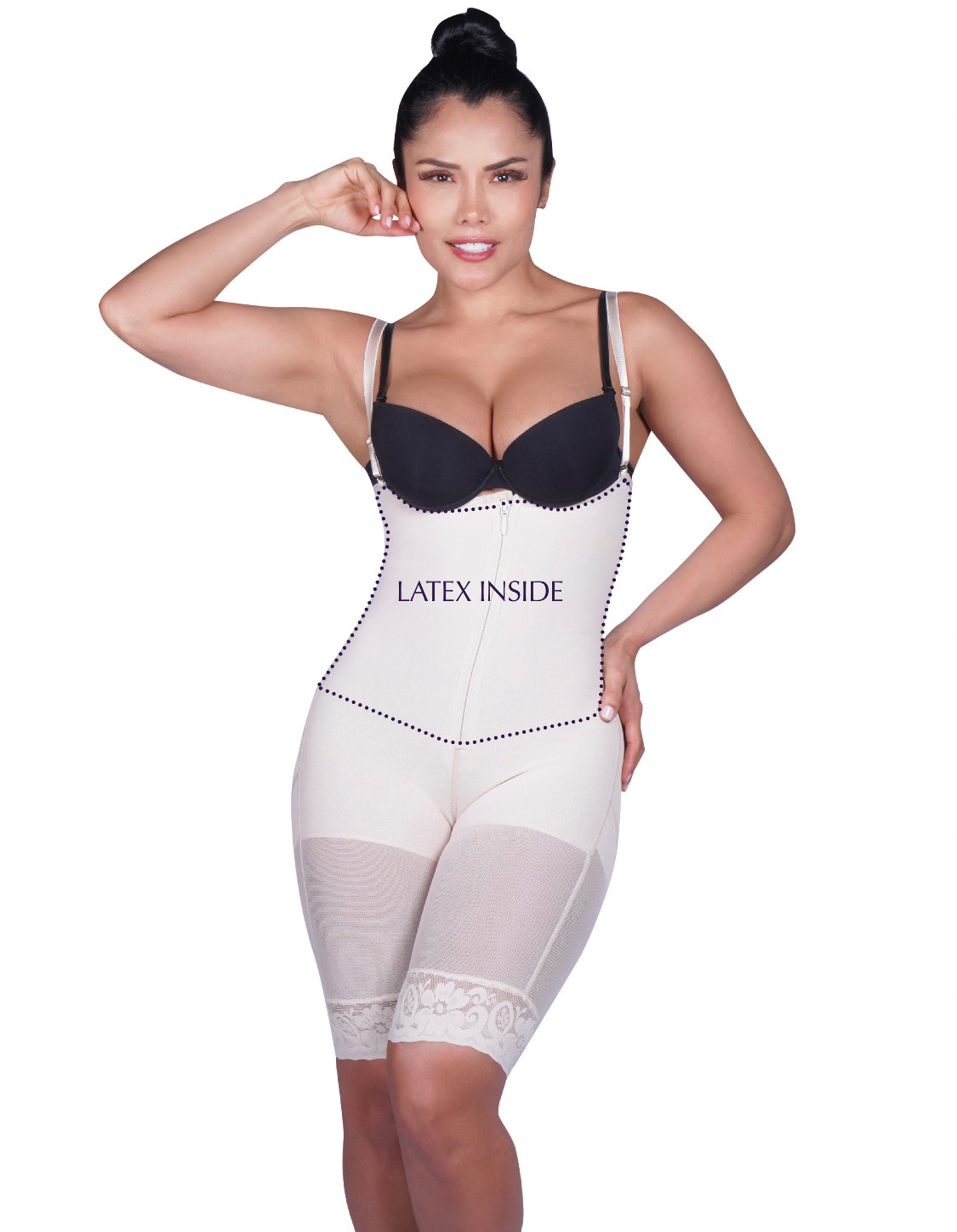
Extra-strong compression
Siluet Sabina
Explore Siluet Sabina’s features, composition and size chart. After surgery, confirm the model with your surgeon.
View model →
Key points
Do not ignore a seroma or try to treat it yourself. If you suspect a fluid collection, contact your surgeon. Well-fitted compression garments can support the body during healing, but they do not replace medical care.
Models in this article
Need help choosing?
Browse Siluet models or contact us — we’ll help you find the model and size.
View catalogMore articles
· 4 min read
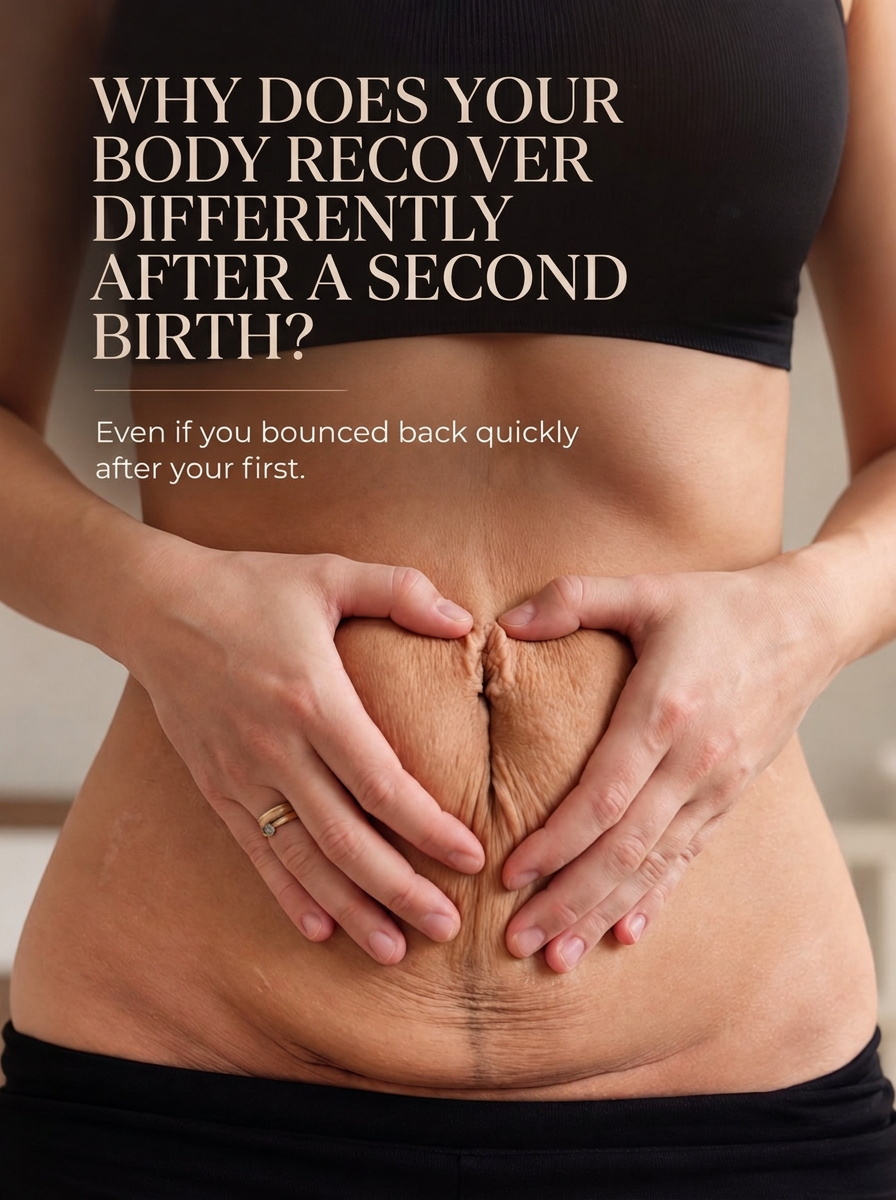
Why Does the Belly Take Longer to Recover After a Second Birth?
Stretched tissue, diastasis, swelling — why your figure changes differently after a second birth and how well-fitted compression can help.
Read article →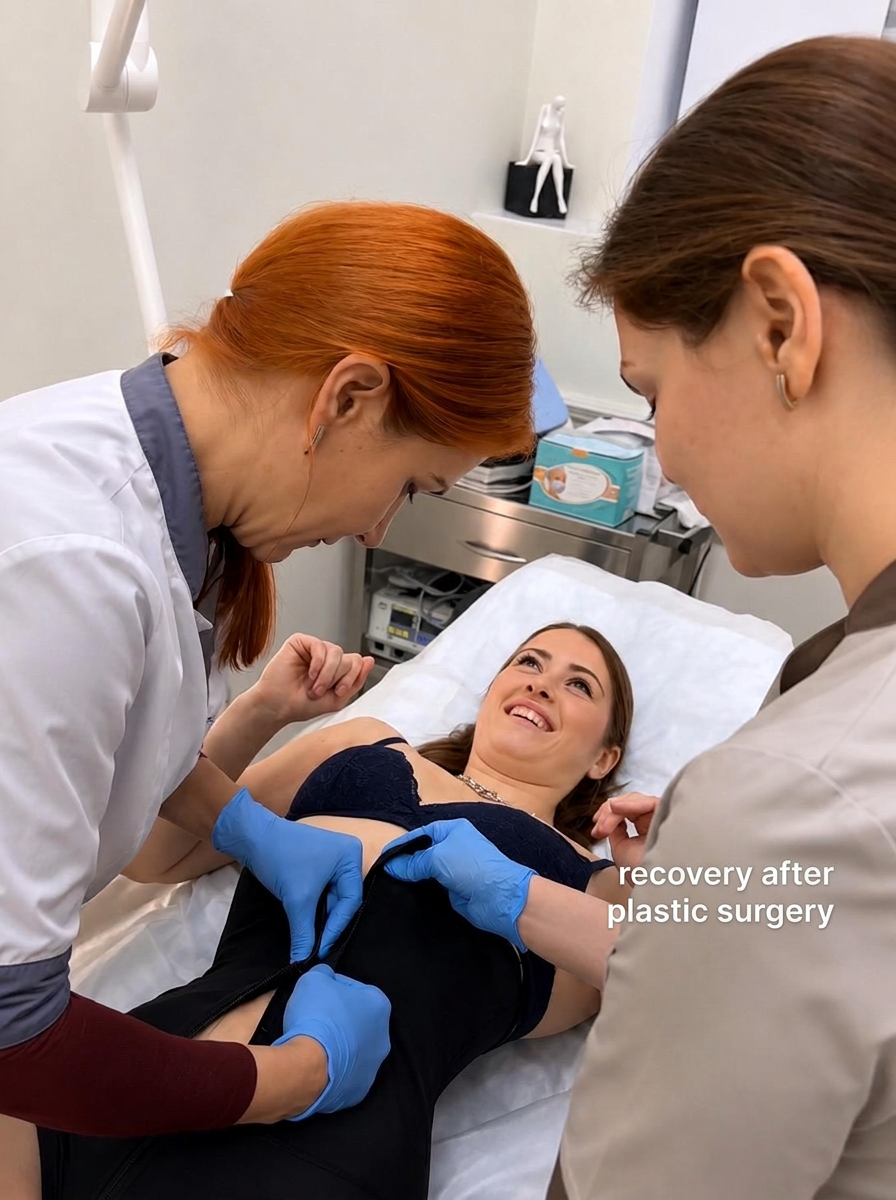
· 5 min read
Compression Garments After Liposuction: Why You Need Them and How to Choose
Why compression matters, how it differs from regular shapewear, and how to choose the right model and size after abdominal and body liposuction.
Read article →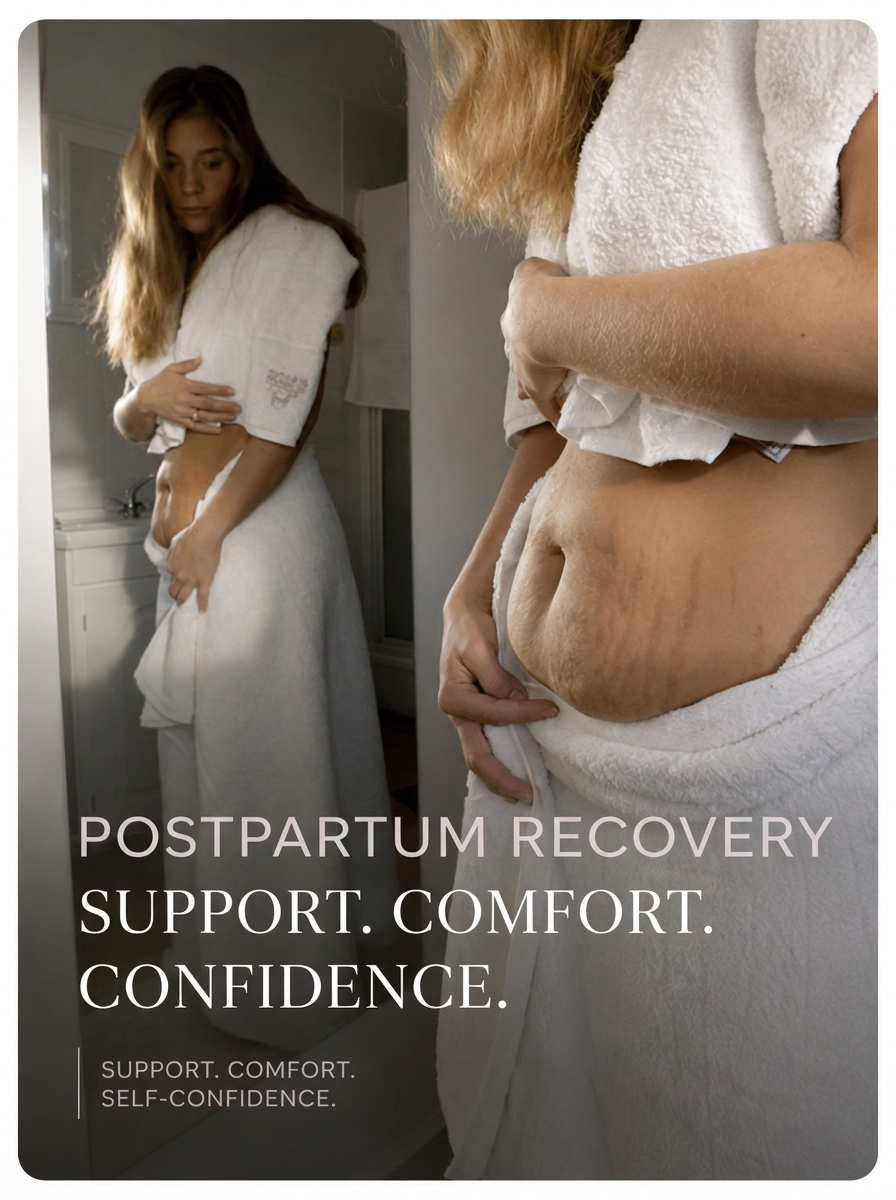
· 5 min read
Postpartum Shapewear: Why Wear It and How to Choose
Abdominal and back support after pregnancy: how the models differ, how to find your size, and why the timing should be agreed with your doctor.
Read article →